Best Books on Change Management
Change management literature crystallizes around Kotter’s Leading Change, Bridges’ Managing Transitions, and Heath’s Switch: you get both the organizational choreography and the human behavior shift that makes change stick.
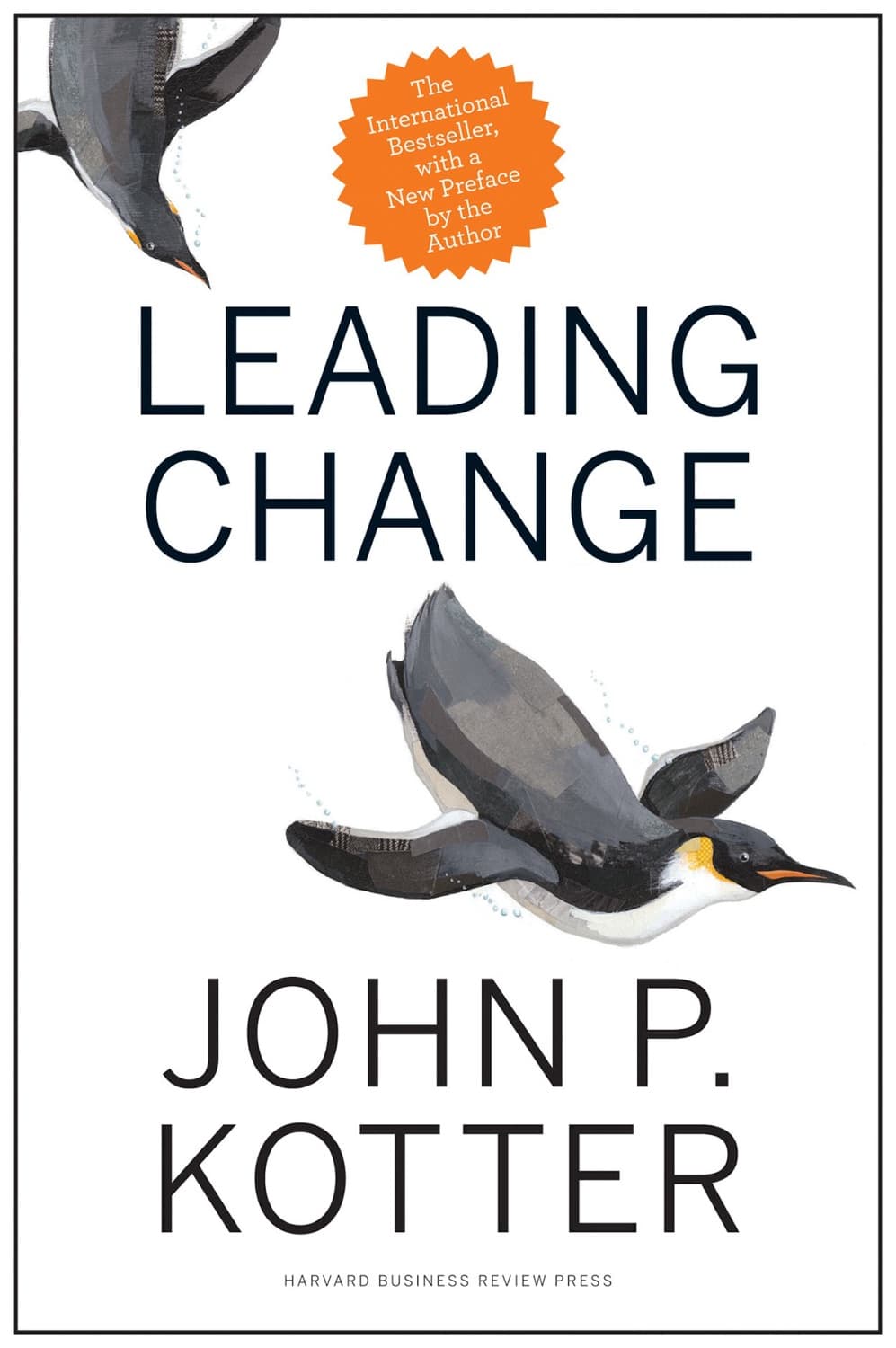
Leading Change
John P. Kotter
Leading Change turns vague transformation goals into a disciplined sequence that prevents teams from skipping the hard parts of change.
The 8-step process: establish urgency, build coalitions, sustain gains.
Kotter’s process reframes change as leadership work with visible momentum and accountability. It fits change management because it gives you a repeatable way to manage the organizational transformation side, not only the planning or messaging.
Switch
Chip Heath
Switch teaches you to spot when people are “not trying,” and redesign the situation so effort becomes the default.
Direct the Rider, motivate the Elephant, shape the Path.
The book distinguishes rider and elephant and then translates that into change moves that actually target behavior. For change management, it complements organizational models with practical levers for teams, habits, and resistance.
Managing Transitions
William Bridges
Managing Transitions shifts the focus from organizational moves to the emotional work people must complete to let go and move on.
Change is external; transition is internal.
Bridges distinguishes change (what happens) from transition (what people experience). That matters in change management because it helps you plan communication and support around the human timeline, reducing confusion and backlash.
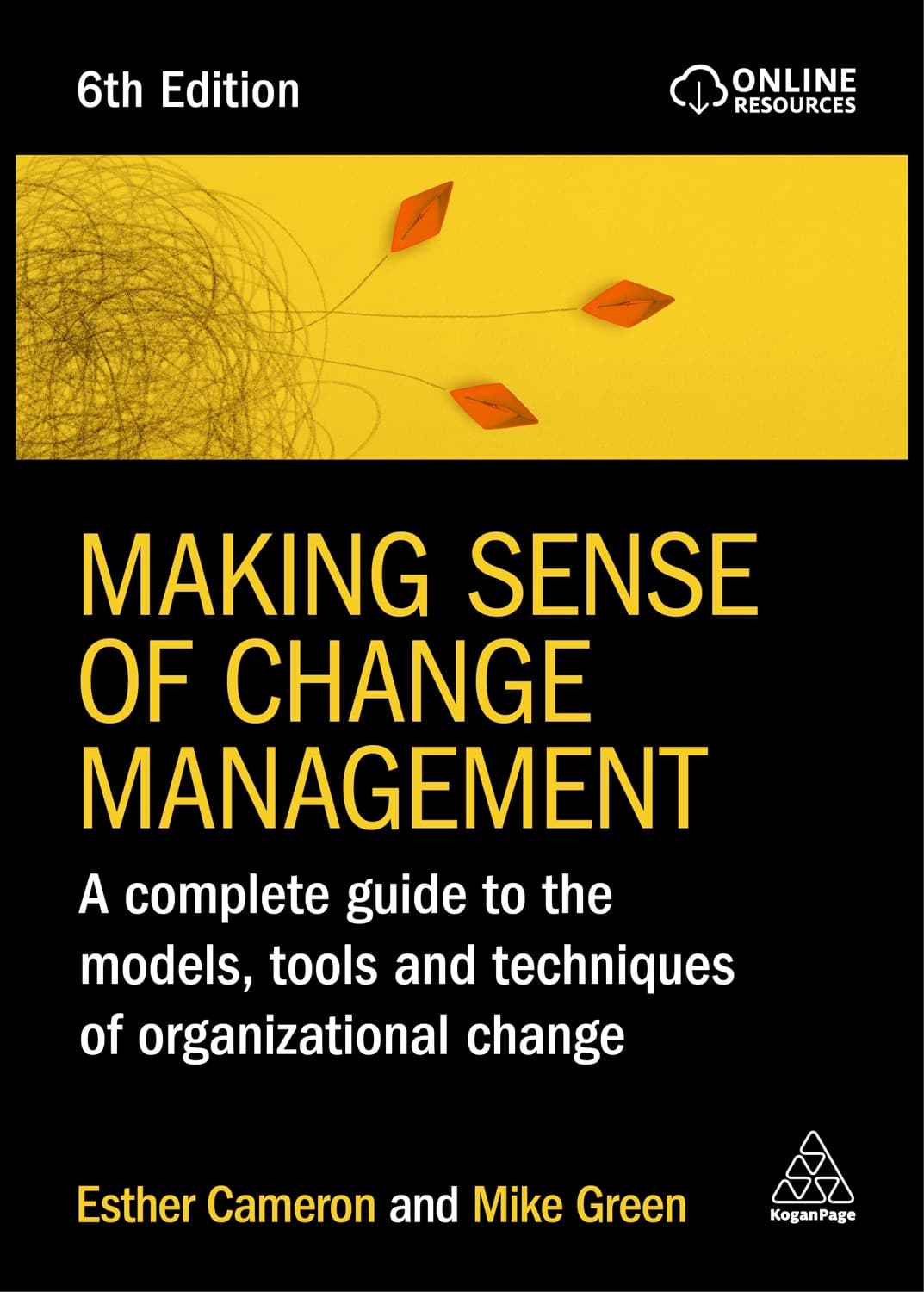
Making Sense of Change Management
Esther Cameron, Mike Green
Making Sense of Change Management turns competing models into a usable map you can apply to real organizational situations.
Use context to choose and apply the right change model.
Rather than treating change management as one-size-fits-all, Cameron and Green connect major approaches to practical contexts. That makes it strong when you need clarity across tools and frameworks while still keeping the work grounded in day-to-day execution.
ADKAR
Jeff Hiatt
ADKAR makes change measurable by breaking the human side into clear outcomes: awareness, desire, knowledge, ability, reinforcement.
ADKAR: Awareness, Desire, Knowledge, Ability, Reinforcement.
For change management programs, ADKAR gives a structured way to diagnose where adoption breaks and what interventions to use. It is especially useful when you need consistent change leadership across multiple teams or rollouts.
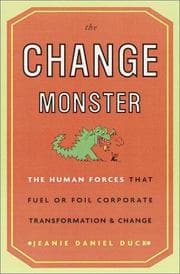
The Change Monster
Jeanie Daniel Duck
The Change Monster argues that “normal” organizations can generate resistance that looks irrational only from the surface.
Expect resistance rooted in identity and organizational dynamics.
Duck gives you a lens on how change triggers hidden dynamics like politics, identity, and organizational logic. That matters in change management because it helps you anticipate the real forces shaping adoption, not just the official plan.
Direct the Rider, motivate the Elephant, shape the Path.
Change by Design
Tim Brown
Change by Design reframes transformation as a design problem: prototype the future, learn fast, and reduce the distance between ideas and reality.
Prototype to learn, then iterate toward adoption.
Brown brings innovation thinking into change management, emphasizing experimentation and user-centered understanding. It helps when your organization needs change that survives contact with real people, constraints, and behaviors.
Influencer: The New Science of Leading Change, Second Edition (Paperback)
Joseph Grenny, Kerry Patterson, David Maxfield, Ron McMillan, Al Switzler
Influencer shifts change leadership from persuasion to designing conditions that make the right behavior the easy, obvious choice.
Tweak motivation, ability, and environment together.
The authors apply behavior science to organizational change by showing how social influence, incentives, and environment combine to shape outcomes. For change management, it strengthens your toolkit for activating multiple levers at once when resistance is entrenched.
Can we tailor this list for you?
Type your question in the bar below and the AI will tailor a fresh set of picks just for you.