Best Books for Aspiring Management Consultants
Breaking into McKinsey, BCG, or Bain takes more than cracking a case. The strongest candidates arrive fluent in structured problem solving, ruthless in how they communicate, and genuinely curious about strategy. These books build that range, from the interview math to the intellectual history of the firms themselves.
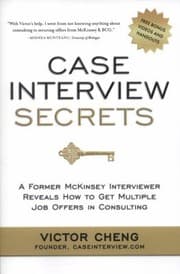
Case Interview Secrets
Victor Cheng
The clearest playbook for cracking the case interview.
Interviewers grade how you think out loud; lay out a structure first, then solve, so they can follow your logic.
Cheng, a former McKinsey interviewer, reverse-engineers what evaluators actually score, giving a repeatable structure for sizing markets and breaking problems apart under pressure.
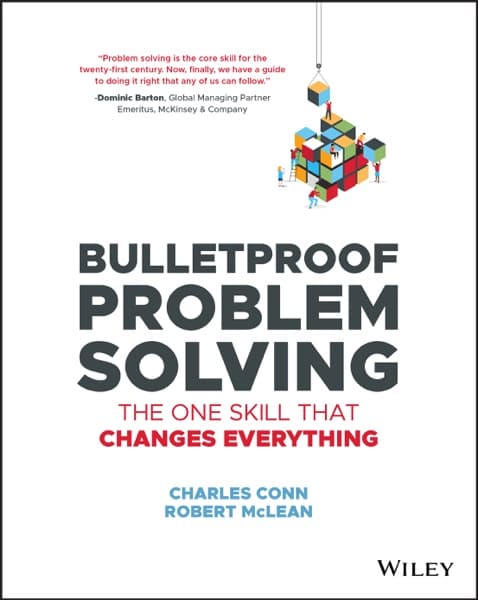
Bulletproof Problem Solving
Charles Conn, Robert McLean
McKinsey's modern seven-step problem-solving method.
A sharp problem statement does half the work; a vague question guarantees a vague, unsellable answer.
Conn and McLean lay out the firm's current approach to defining a problem, building issue trees, and pressure-testing answers, the actual workflow consultants run on real engagements.
The pyramid principle
Barbara Minto
The McKinsey grammar for writing and presenting ideas.
Start with the conclusion, then group the support beneath it; an audience waiting for your point stops listening.
Minto, who taught a generation of consultants to write, shows how to lead with the answer and stack supporting logic so a busy executive grasps the recommendation in the first sentence.
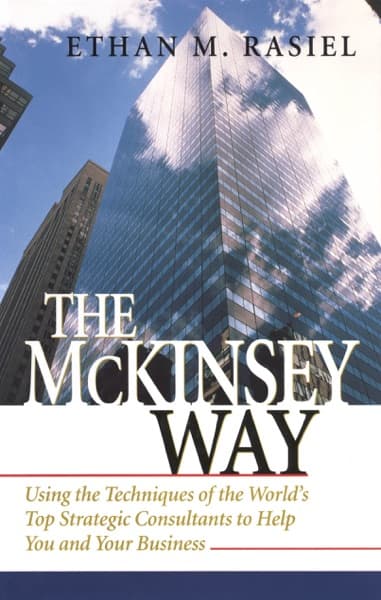
The McKinsey way
Ethan M. Rasiel
A short, candid tour of how the firm actually works.
Be MECE: mutually exclusive, collectively exhaustive; if your buckets overlap or leak, the analysis will too.
Rasiel, a former associate, sketches the firm's habits around hypotheses, MECE thinking, and managing clients, the readable orientation to consulting culture before the heavier texts.
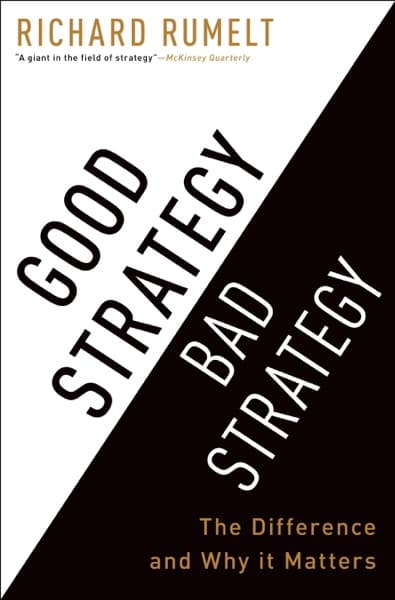
Good Strategy / Bad Strategy
Richard Rumelt
What real strategy is, and how to spot the fake kind.
Most strategy is ambition dressed as a plan; the real thing names the hard problem and concentrates force on it.
Rumelt strips strategy down to diagnosis, a guiding policy, and coherent action, arming a would-be consultant to tell substance from the fluffy goal-stacking that often passes for strategy.
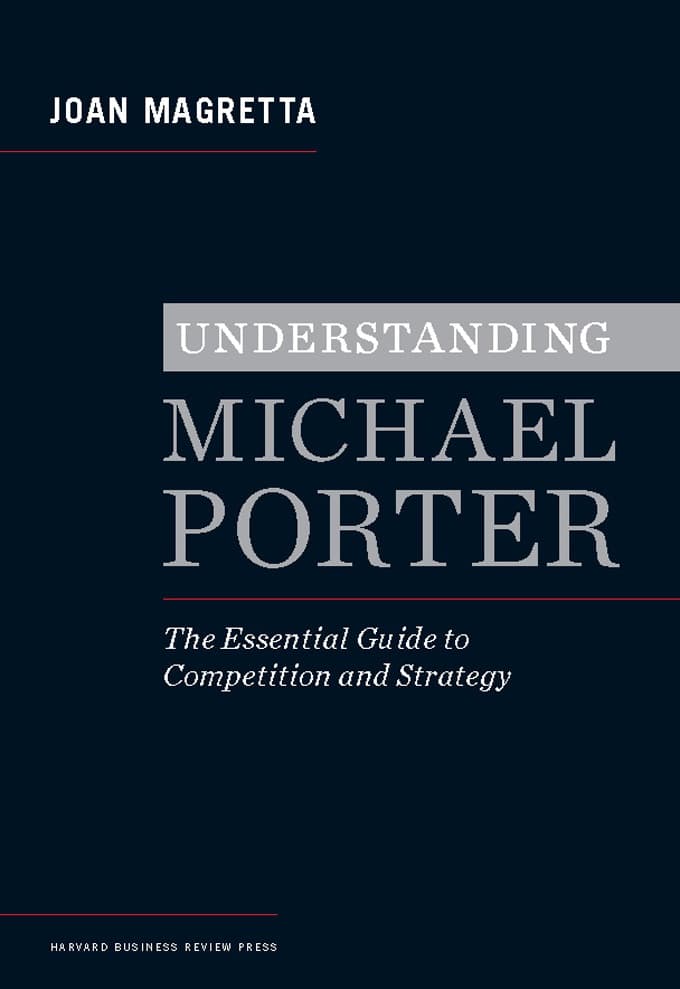
Understanding Michael Porter
Joan Magretta
Porter's competitive strategy, made finally readable.
Competing to be the best invites imitation; durable advantage comes from being deliberately different, not marginally better.
Magretta distills Porter's five forces and competitive positioning into a clear short book, giving the analytical backbone a consultant needs without the density of the original text.
A sharp problem statement does half the work; a vague question guarantees a vague, unsellable answer.
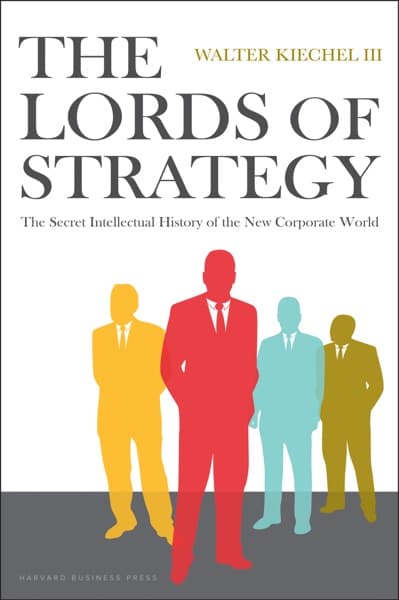
Lords of Strategy
Walter Kiechel
The secret intellectual history of the strategy industry.
Today's frameworks are someone's old breakthrough; knowing where the experience curve came from beats memorizing it.
Kiechel traces how BCG, Bain, McKinsey, and Porter invented modern strategy consulting, the origin story that explains why the firms think the way they do and sell what they sell.
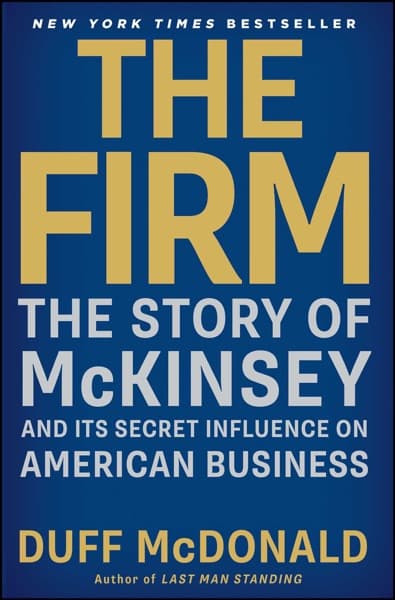
The Firm
Duff McDonald
An unsparing history of McKinsey's reach and influence.
Proximity to power is the product; McKinsey sells access to its network as much as it sells the analysis.
McDonald chronicles how one firm came to advise governments and the Fortune 500, a clear-eyed account of McKinsey's power and its failures that no aspiring hire should skip.
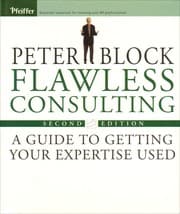
Flawless consulting
Peter Block
The craft of advising a client who can ignore you.
You have no authority, only influence; a recommendation counts only once the client genuinely owns the decision.
Block focuses on the relationship beneath the slides, how to contract with a client, surface resistance, and stay authentic, the human skills that separate a trusted advisor from a deck jockey.
Can we tailor this list for you?
Type your question in the bar below and the AI will tailor a fresh set of picks just for you.