Best Books for Product Designers
Product design craft spans usability, interaction, and the messy work of shipping. Don Norman's The Design of Everyday Things sets the foundation, Steve Krug's Don't Make Me Think keeps it usable, and Marty Cagan's Inspired connects design to real product decisions.
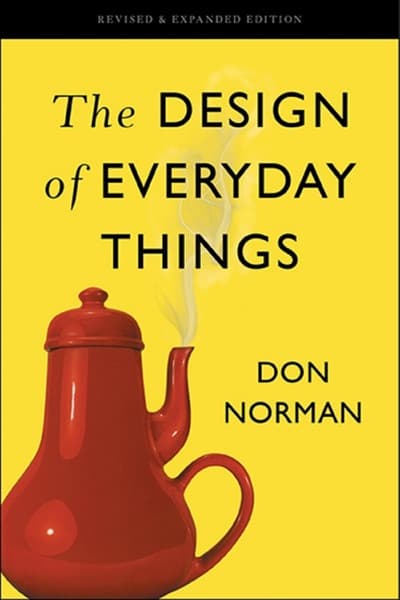
The Design of Everyday Things
Don Norman
A door you can't tell whether to push or pull is a design failure, not your mistake.
Blame the design, not the person using it.
Don Norman lays out the vocabulary product designers reason with daily: affordances, signifiers, mapping, feedback, and mental models. It teaches you to locate friction in the design rather than in the user. Essential grounding for anyone shaping how people interact with things.
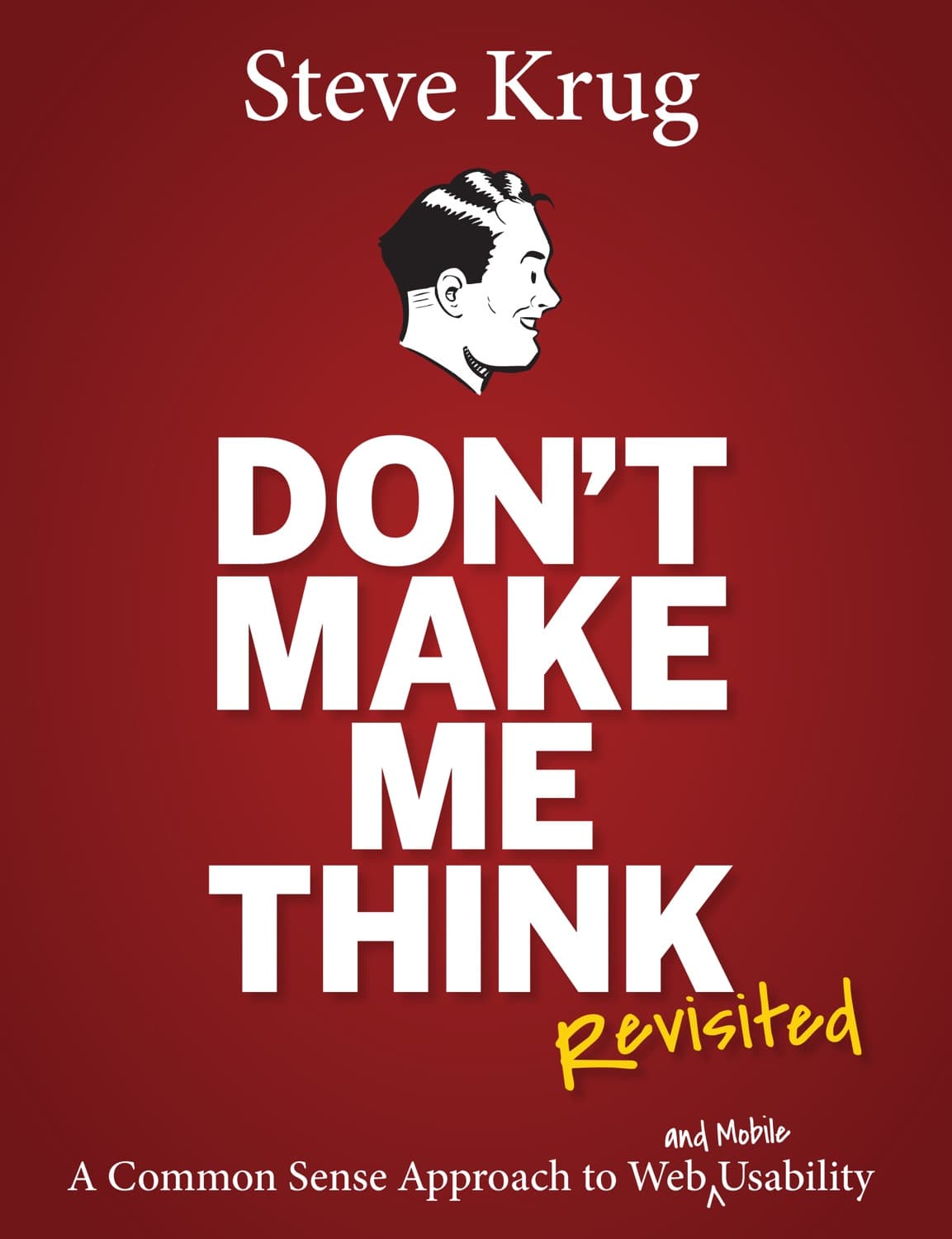
Don't Make Me Think
Steve Krug
Every question a page makes you stop and answer is a small tax on attention.
Make interfaces obvious so users never have to think.
Steve Krug distills web and app usability into a handful of memorable rules about clarity, navigation, and self-evident interfaces. Short, funny, and concrete, it is built for designers who want fast instincts they can apply tomorrow. A practical companion to heavier theory.
Sprint
Jake Knapp, John Zeratsky, Braden Kowitz
Five days, a real prototype, and actual customer reactions before you commit a quarter of work.
Prototype and test before you commit to building.
Jake Knapp, John Zeratsky, and Braden Kowitz document the design sprint process developed at Google Ventures for testing big ideas quickly. It gives product designers a concrete, day-by-day structure for turning questions into validated direction. Useful whenever a team is stuck debating instead of building.
Inspired
Marty Cagan
The difference between products people love and products people tolerate often lives upstream of the pixels.
Discover the right product before designing it well.
Marty Cagan describes how strong product teams discover what to build and how designers fit into that work alongside product and engineering. It connects design craft to outcomes, prioritization, and discovery. Aimed at designers who want to influence product direction, not just execute it.
100 things every designer needs to know about people
Susan Weinschenk
People glance, satisfice, and misremember, and good design plans for all three.
Design around how people actually perceive and remember.
Susan Weinschenk translates research on perception, attention, and memory into short, applicable design guidelines. Each entry is a couple of pages, making it easy to dip into when a specific decision needs grounding. A bridge between cognitive science and everyday interface choices.
Universal principles of design
William Lidwell
A reference deck of design ideas you can pull from when a layout or flow isn't working.
Keep a broad toolkit of principles within reach.
William Lidwell and his co-authors catalog concepts from many disciplines, each on a single spread with examples. It is built for browsing and lookup rather than straight reading. Handy for product designers who want a broad vocabulary of principles to apply and cite.
Make interfaces obvious so users never have to think.
Articulating Design Decisions
Tom Greever
The best design loses if you can't explain why it's right to the people who must approve it.
Defending a design is part of designing it.
Tom Greever focuses on the communication half of the job: presenting work, handling feedback, and getting stakeholders to agreement. It is practical and scenario-driven, with language you can use in real meetings. For designers whose ideas keep dying in review.
Can we tailor this list for you?
Type your question in the bar below and the AI will tailor a fresh set of picks just for you.