Best Books on Typography
Typography gets sharper when you learn the craft behind it: Robert Bringhurst’s The Elements of Typographic Style sets the rules, while Ellen Lupton’s Thinking with Type helps you apply them to real layouts.
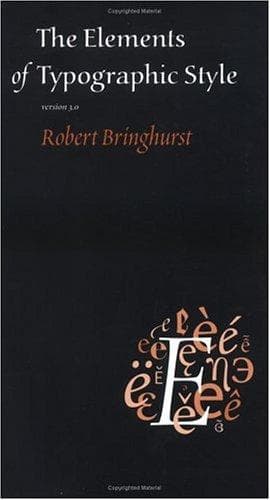
The Elements of Typographic Style
Robert Bringhurst, Robert Bringhurst
Finish Bringhurst and your eye starts policing consistency: every choice, from spacing to page rhythm, feels intentional instead of decorative.
Read it as a style constitution: principles before trends.
It treats typography as a disciplined craft with principles you can reuse across print and digital. That matters for learning typography, because you get a stable reference when design advice sounds subjective.
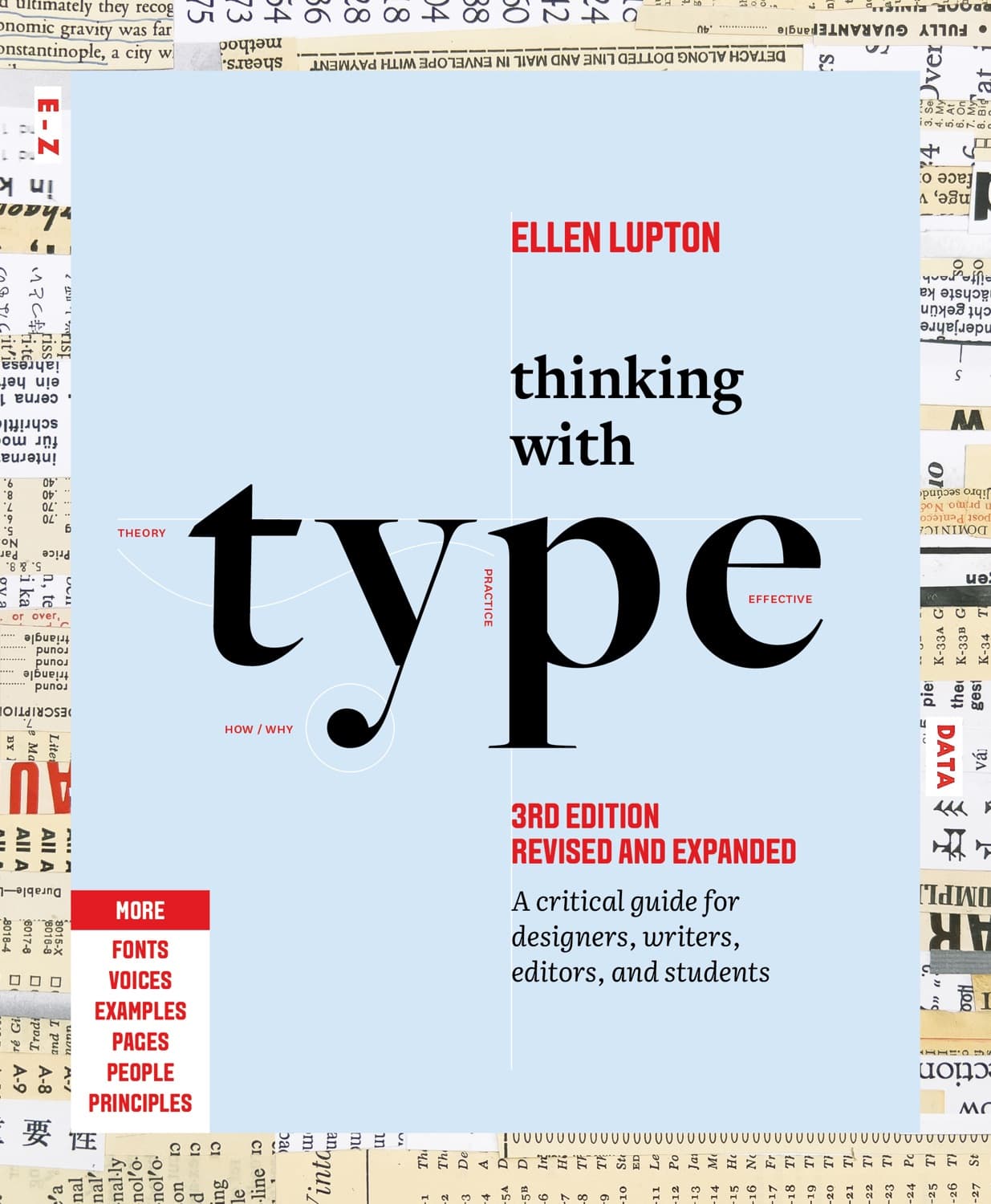
Thinking with Type
Ellen Lupton
Lupton turns type from a “look” into a reasoning tool, so hierarchy and layout stop feeling mysterious.
Use hierarchy to tell the reader what matters.
You learn how typography communicates: selecting type, building hierarchy, and designing pages with clarity. For typography-focused reading, it bridges the gap between theory and decisions you actually make.
Typography
Emil Ruder
Ruder teaches typographic structure like choreography: spacing and alignment create meaning, not just neatness.
Rhythm and structure beat decoration.
This is foundational Swiss thinking where rhythm, readability, and system replace guesswork. It fits typography learners who want the underlying logic before experimenting freely.
The Complete Manual of Typography
James Felici
Felici replaces “it depends” with workable defaults, so production choices become repeatable.
Default settings prevent most typographic errors.
It’s a practical handbook for setting type with concrete guidance for both print and digital contexts. That makes it ideal when your goal is to apply typography rules confidently, not just admire them.
Grid systems in graphic design
Josef Müller-Brockmann
After Müller-Brockmann, pages feel like ordered systems: layout decisions snap into place through structure.
A grid is a decision-making tool.
You learn grid logic and ordering systems that make typography layouts more consistent and easier to scale. For typography reading, this gives you a framework for where type belongs and why.
Typographic Systems of Design
Kimberly Elam
Elam makes typographic style feel systematized, so you can generate coherent variety instead of redesigning from scratch.
Pick a system, then enforce its rules.
It explains major typographic systems and how they organize form over time. That matters for typography because it helps you choose a method, then apply it consistently across a layout or series.
Use hierarchy to tell the reader what matters.
Stop stealing sheep & find out how type works
Erik Spiekermann, E.M Ginger
Spiekermann demystifies type so your choices start sounding like communication, not aesthetics alone.
Type choices are communication decisions.
It’s an accessible primer that connects typographic decisions to clarity and human reading. If you want typography books that explain why changes affect meaning, this one keeps the learning friendly.
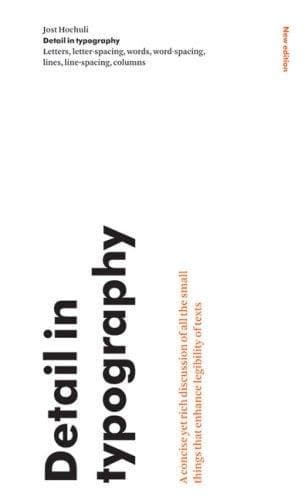
Detail in Typography
Jost Hochuli
Hochuli trains attention to the small stuff: spacing and punctuation become tools for readability.
Good typography lives in spacing and punctuation.
It focuses on microtypographic details that elevate everyday layouts into polished ones. For typography, this is where your work stops looking “good enough” and starts looking considered.
Can we tailor this list for you?
Type your question in the bar below and the AI will tailor a fresh set of picks just for you.