Best Books on Vaccine Development
Vaccine development reads differently after Plotkin's Vaccines and Paul A. Offit’s Vaccinated: one builds the scientific map, the other shows how the modern breakthroughs were actually made and defended. Together, they clarify what the evidence must do.
Plotkin's Vaccines,E-Book
Walter A. Orenstein, Paul A. Offit, Kathryn M. Edwards, Stanley A. Plotkin
Finish Plotkin’s Vaccines and vaccine development stops being a black box: you can trace how a candidate moves from design logic to clinical evidence to real-world use.
Relate immunologic mechanisms to clinical endpoints.
It’s different because it treats development as a chain of decisions, with the immunology and evidence standards laid out side by side. That matters for vaccine development because it helps you see what “good science” looks like at each step.
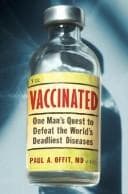
Vaccinated
Paul A. Offit
After Vaccinated, you’ll hear modern vaccine history as engineering: breakthroughs come from testable hypotheses, not miracles or slogans.
Ask which evidence made the breakthrough believable.
Offit’s advantage is insider clarity, turning what looks like pure medical progress into a readable account of method, institutions, and the hard tradeoffs behind timing and safety claims. For vaccine development, it gives human context to the process that textbooks usually abstract away.
The Panic Virus
Seth Mnookin
Read The Panic Virus and you’ll understand vaccine controversies as a competing story about evidence, not just fear.
Policy turns uncertainty into public risk.
Mnookin’s narrative strength is how it connects vaccine science, policy, and public trust when outbreaks and messaging collide. That matters because vaccine development cannot be separated from approval pathways, risk perception, and how decisions are defended.
The Vaccine Race
Meredith Wadman
The Vaccine Race reorients vaccine development around a hidden infrastructure: cell lines as the enabling tools that made major vaccines possible.
Cell lines determine what development can reach.
Wadman’s focus is the biological supply chain behind breakthroughs, showing how practical constraints shaped scientific outcomes. For vaccine development, it adds a crucial lens: success often depends on upstream tools long before clinical trials.
Vaccines
Kristen A. Feemster
After Kristen Feemster’s Vaccines, the whole field feels navigable: you can follow what each study is trying to prove.
Trial phases answer different evidence questions.
It stands out for making the evaluation logic readable, especially how safety, effectiveness, and evidence standards work together. That matters for vaccine development because it’s the fastest way in from fundamentals to how real decisions get made.
Can we tailor this list for you?
Type your question in the bar below and the AI will tailor a fresh set of picks just for you.