Best Books on Mediation & Conflict Resolution
Mediation and conflict resolution move from “winning” to structured dialogue: Roger Fisher’s Getting to Yes and Bush and Folger’s The Promise of Mediation reframe the goal as workable agreements and change, not force.
Getting to Yes
Roger Fisher
Finish with a clear negotiation lens: separate people from the problem, turn positions into options, and insist on objective criteria so mediation stops becoming a tug-of-war.
Separate the people from the problem, then invent options.
It gives a principled framework that translates directly into mediator talk tracks and negotiation prep. For conflict resolution, the key shift is treating disagreements as problems to solve with standards, not battles to win.
Difficult Conversations
Douglas Stone, Bruce Patton, Sheila Heen, Roger Drummer Fisher
You start hearing the real conflict under the words: what happened, what you believe, and how fear and pride shape your reactions.
Name the three conversations: facts, feelings, identity.
Instead of debating who is right, it helps you slow down to identify the emotional and factual layers in high-stakes conversations. That matters for mediation because it supports safer, more accurate exchange when parties are triggered.
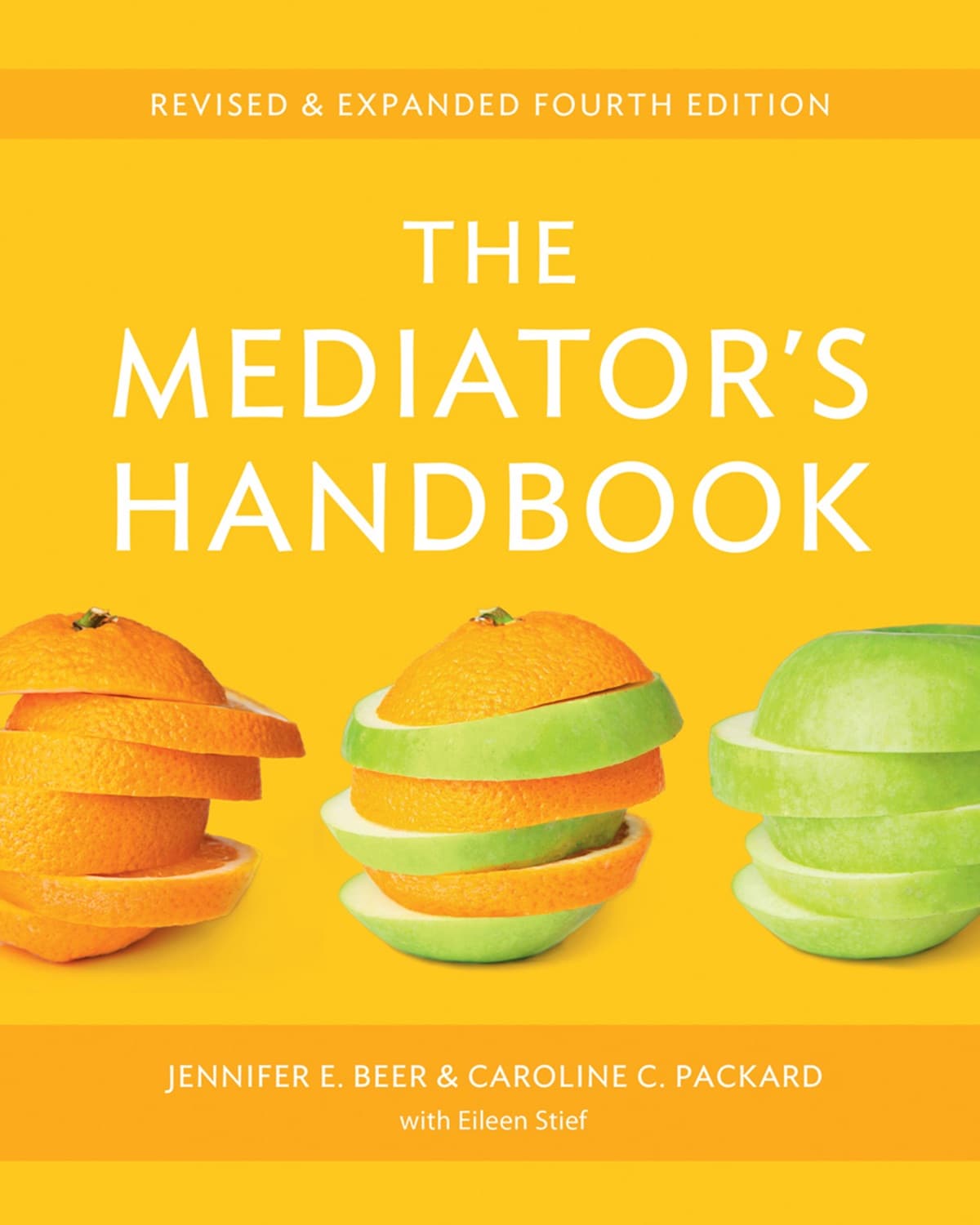
The Mediator's Handbook
Jennifer E. Beer, Caroline C. Packard
Mediation feels less mysterious: you leave with a repeatable way to structure sessions so discussions move from conflict noise to workable decisions.
Use caucus strategically to reframe and gather options.
This book operationalizes the mediator role with concrete process guidance and technique. For anyone practicing conflict resolution, that structure reduces improvisation and improves how parties share information and options.
Crucial Conversations
Kerry Patterson, Joseph Grenny, Ron McMillan, Al Switzler, Stephen R. Covey
You learn how people talk when stakes are high: the goal becomes safety and shared meaning, not blunt truth or avoidance.
Start with heart: add safety before facts.
It equips you to manage volatile dialogue with practical methods for getting people to stay in the conversation. In mediation, those skills help prevent escalation and keep parties aligned long enough to negotiate solutions.
The Promise of Mediation
Robert A. Baruch Bush, Joseph P. Folger
You stop treating mediation as just a settlement machine and start seeing it as a pathway to empowerment and recognition for the people involved.
Transformative mediation targets empowerment and recognition.
It lays out transformative mediation, where the outcome is not only agreement but also shifts in how parties understand and relate to one another. That lens is especially useful when conflicts persist because of dignity, agency, and misunderstanding.
Can we tailor this list for you?
Type your question in the bar below and the AI will tailor a fresh set of picks just for you.