Best Books on Negotiation
The best negotiation books teach you to control framing and emotion before anyone names a number. Fisher and Ury's Getting to Yes built the playbook; Chris Voss and Jim Camp's Start with No sharpen the edges.
Getting to Yes
Roger Fisher
After you read it, “positions vs. interests” becomes your default way to reframe fights into options you can both live with.
Separate people from the problem.
It replaces adversarial bargaining with a principled method: focus on interests, invent options, use objective criteria. That matters because it gives you a repeatable lens for everyday and professional negotiations, even when the other side is stuck in demands.
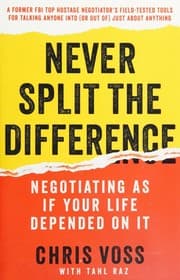
Never Split the Difference
Chris Voss, Tahl Raz
You start treating pauses, mirroring, and labeling like tools, not tricks, and you feel how quickly resistance can soften.
Use “mirroring” to reduce friction.
It distills high-stakes tactics drawn from hostage negotiation into practical language for persuasion under pressure. That matters if your negotiations involve volatility, brinkmanship, or rooms where the relationship can turn tense fast.
Bargaining for advantage
G. Richard Shell
It teaches you to plan leverage like a system, so the “emotional” hunch becomes a defensible strategy.
Map your BATNA before you talk.
Shell walks through preparation, ethics, and how style differences shape outcomes, not just tactics at the table. That matters for negotiations where you need to anticipate constraints and choose moves that remain credible and sustainable.
Difficult Conversations
Douglas Stone, Bruce Patton, Sheila Heen, Roger Drummer Fisher
After finishing it, you stop arguing over facts and start diagnosing what is underneath: blame, hurt, and fear.
Look for the stories you tell yourself.
This book reframes tough talks as three intertwined conversations, so you can respond to emotion and meaning without escalating. It matters for negotiations where the real barrier is identity, trust, or long-running resentment, not numbers.
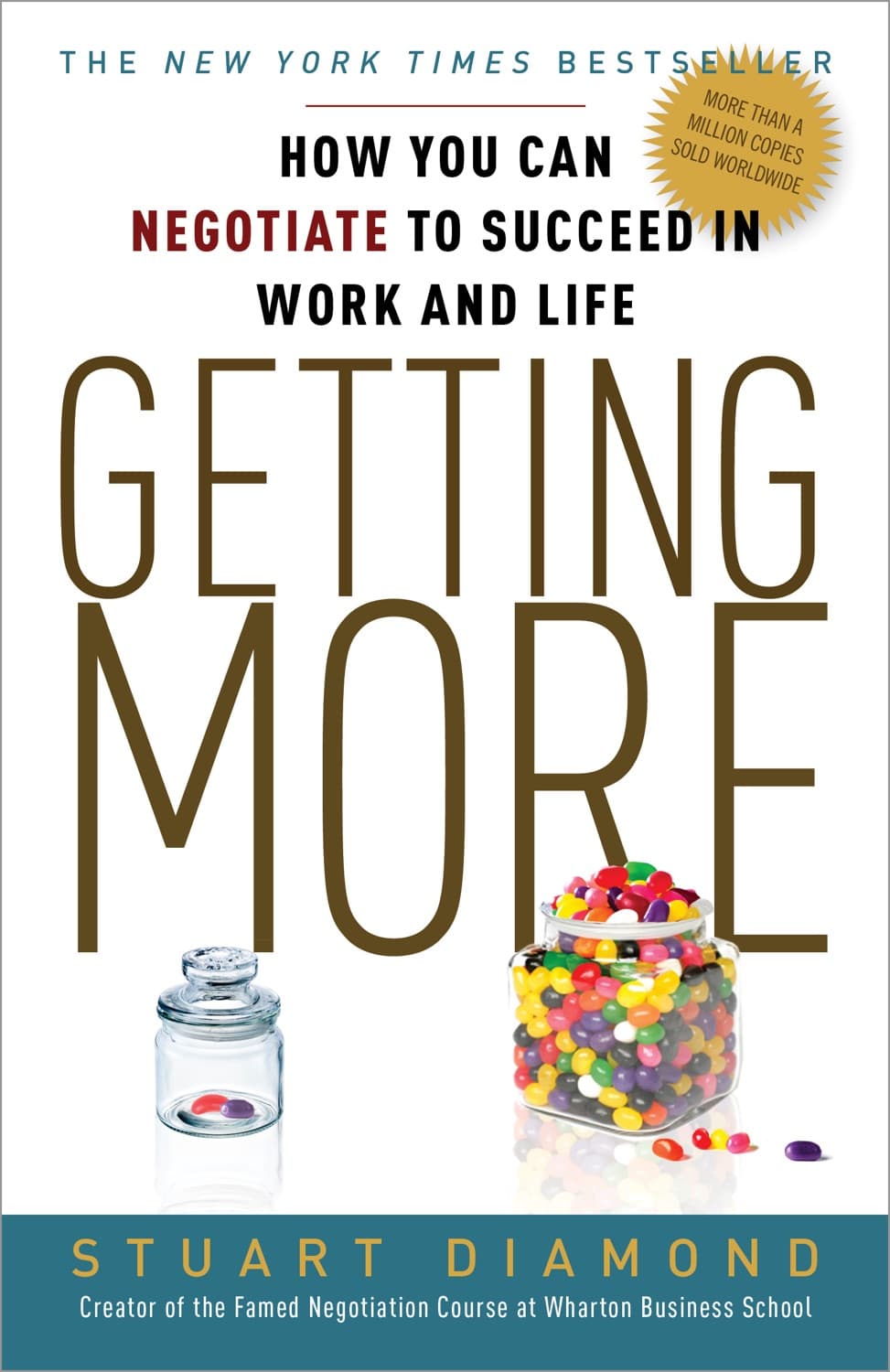
Getting More
Stuart Diamond
You learn to ask for more with fewer theatrics, because the method turns persuasion into clear, controllable steps.
Negotiation is a sequence of asks.
Diamond emphasizes influence in everyday and business settings, using examples to show how skilled negotiators structure requests and respond to pushback. That matters when you want results but do not want to adopt a cold, purely adversarial posture.
Start with no
Jim Camp
You feel the negotiation change when you stop explaining yourself and start setting a firm, simple boundary first.
Start with NO to regain control.
Camp’s method trains you to reduce neediness and bad deals by delaying concession and anchoring on a clear refusal, then moving from there. That matters when you tend to over-explain, give away leverage early, or negotiate from urgency rather than clarity.
Use “mirroring” to reduce friction.
The Book of Real-World Negotiations
Joshua N. Weiss
Instead of one “perfect” scenario, you see negotiations behave differently across contexts and constraints, and your judgment upgrades.
Learn by comparing cases, not slogans.
It uses case-based lessons to broaden how you think about negotiation beyond standard business examples. That matters because you get practice applying principles to the messy variety of real situations you will actually face.
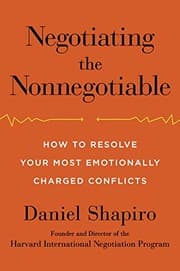
Negotiating the Nonnegotiable
Daniel Shapiro
You stop trying to win the dispute and start building a bridge around identity and core needs, even when the stakes are personal.
Distinguish positions from identity needs.
Shapiro adds an emotional and identity lens for disputes that feel stuck or existential. That matters when your negotiations are about values, roles, respect, or belonging, where logic alone will not unlock movement.
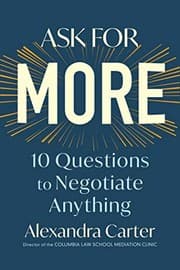
Ask for More
Alexandra Carter
You come away with language that makes ambitious requests sound normal, not desperate, and that changes how the other side hears you.
Make the ask specific and timely.
Carter focuses on practical, approachable coaching for real professional conversations and everyday bargaining moments. That matters when you want to increase your ask while staying respectful and credible, so you do not pay for boldness with trust.
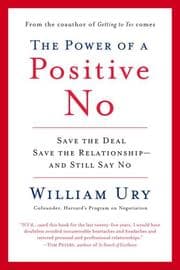
The Power of a Positive No
William Ury
You learn to refuse in a way that protects your relationship, so the “no” becomes the opening instead of the dead end.
Say no, then offer a yes to principles.
Ury’s approach centers boundary-setting without humiliation, keeping cooperation alive while you hold the line. That matters for negotiations in family, work, or any setting where saying no is emotionally charged and you need a clean, constructive stance.
Can we tailor this list for you?
Type your question in the bar below and the AI will tailor a fresh set of picks just for you.