Best Books on Prompt Enigneering
Prompt engineering gets practical fast with The Art of Prompt Engineering with chatGPT by Nathan Hunter, then widens into reusable patterns in Prompt Engineering for Generative AI by James Phoenix and Mike Taylor. The shared thread: turning vague asks into controllable outputs.
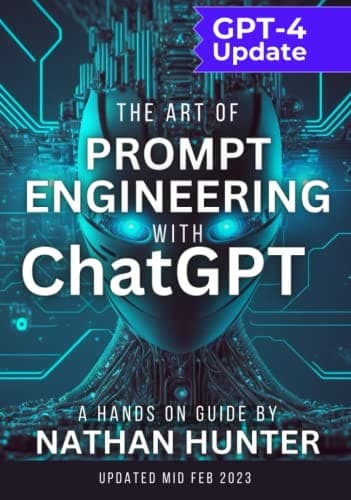
The Art of Prompt Engineering with chatGPT
Nathan Hunter
Your prompts stop “hoping” and start behaving: you’ll learn how to structure inputs so ChatGPT consistently follows role, constraints, and formats.
Use explicit constraints and output formats
This focuses tightly on ChatGPT-style workflows, so the guidance feels immediately testable. It matches prompt engineering as a craft, not a vague theory, and helps you build a prompt-writing routine you can reuse.
Prompt Engineering for Generative AI
James Phoenix, Mike Taylor
By the end, you’ll recognize prompt patterns as a system: changing one variable can reliably shift reasoning, style, and task execution.
Prompt patterns are modular design choices
It treats prompting as reusable design choices across common generative AI tasks, rather than tool-specific tricks. That matters when you want prompt engineering to generalize beyond one model or interface.
Hands-On Large Language Models
Jay Alammar, Maarten Grootendorst
LLMs become legible: you’ll see how context, tokens, and training signals shape what your prompt can and cannot steer.
Context window shapes what the model can use
Even though it is broader than prompting alone, that mental model makes prompt techniques feel less like folklore and more like control. It’s useful when you want intuition for why prompts work, not only how to write them.
Natural Language Processing with Transformers, Revised Edition
Lewis Tunstall, Leandro von Werra, Thomas Wolf
Transformer mechanics give you a grounded lens: prompting stops being magic and starts mapping to architecture and learned representations.
Attention links prompt tokens to outputs
This builds the foundations that explain how language models process input and why certain prompt behaviors show up. It supports prompt engineering by making your experiments feel principled when you troubleshoot failures.
What We Owe the Future
William MacAskill
AI and other long-horizon risks get a clear ethical frame, so “prompt engineering” sits inside real-world responsibility, not just technical capability.
Long-termism treats future people as morally relevant
This is AI-adjacent rather than a prompting handbook, but it adds the missing north star when you build systems that can affect people far ahead. If the goal includes responsible deployment, it broadens the lens.
Can we tailor this list for you?
Type your question in the bar below and the AI will tailor a fresh set of picks just for you.